

Today, we’re talking about one of the biggest legends of breakfast—Tony the Tiger! You know him from Frosted Flakes, but very few people know his real story and all the challenges he faced along the way.
From his early origins in the 1950s to his rise as an international advertising icon, Tony’s journey is a fascinating blend of marketing genius, cultural shifts, consumer expectations, and corporate strategy. As we explore the world that gave birth to Tony, we’ll see how he evolved over the decades, adapted to changing times, and faced controversies that have even led some countries to ban him from their cereal boxes.
We will then delve into the marketing strategies that shaped his evolving image, followed by the controversies that have dogged Tony and Frosted Flakes in recent decades. Finally, stick around until the end for 8 surprising facts about Tony the Tiger you might not know—some of which will make you appreciate how truly global and enduring this character has become.

CHAPTER 1: KELLOGS & LIFE BEFORE TONY THE TIGER

To begin this story, let’s rewind to the past. It’s the early 1950s. World War II has recently ended, and the United States is in the midst of an unprecedented economic boom. Many American families are leaving crowded city centers for the comforts of suburban neighborhoods. With more stability and prosperity, the family breakfast table becomes a crucial focal point of domestic life. Mothers and fathers begin to see breakfast not just as fuel for the day but as a comforting routine, a family ritual, and increasingly, as a symbol of American abundance and modernity.
This newfound emphasis on breakfast drew the attention of big cereal companies like Kellogg’s, Post, and General Mills. The cereal aisle was turning into a battleground where companies fought to win the loyalty of parents and the taste buds of children. By the 1950s, these companies recognized that children’s preferences held immense power: if kids fell in love with a cereal brand, they would beg their parents to keep buying it week after week. This insight pushed cereal makers to develop cereals and marketing campaigns that appealed directly to kids—bright colors, sweet flavors, fun characters, and catchy jingles.

Kellogg’s had major successes already, with Corn Flakes and Rice Krispies topping many breakfast tables. But by the early 1950s, the company was feeling the pressure to innovate. The market was getting crowded, and families had more choices than ever. Kellogg’s needed something fresh, something that would stand out in a sea of cereal boxes and radio jingles. They wanted a cereal that would not only taste great but also come with a lovable character who could captivate children’s imaginations.
This is how the earliest seeds of Tony the Tiger were planted. But Tony wasn’t even the first choice for Kellogg’s. As the company began developing a sweetened cornflake cereal, which would eventually become known as “Sugar Frosted Flakes,” they also brainstormed which animal mascot would best represent their new product. Several contenders emerged, including Elmo the Elephant, Katy the Kangaroo, and Newt the Gnu. In these early concept stages, no one could have predicted which character would ultimately become a global icon.
CHAPTER 2: THE DEVELOPMENT AND CREATION OF TONY THE TIGER
By 1951, Kellogg’s had finalized the formulation for their new cereal, which they decided to call “Sugar Frosted Flakes.” It featured cornflakes coated with a thin layer of sugar frosting, creating a sweet, crunchy breakfast treat that kids were sure to love. But a great product needed a great pitchman (or pitch-tiger, in this case). To develop a character that would leave a lasting impression, Kellogg’s turned to the Leo Burnett advertising agency, one of the most famous and trusted names in mid-century marketing.
Leo Burnett’s roster of successful ad mascots was already impressive. They had helped shape the Jolly Green Giant, the Pillsbury Doughboy, and even the Marlboro Man. With their track record of turning simple concepts into cultural icons, Kellogg’s had high hopes that Leo Burnett could do the same for their new cereal.
The agency and Kellogg’s teams worked together to brainstorm potential characters. They knew their chosen mascot had to be fun, appealing, and memorable—someone who could represent energy, optimism, and a sense of adventure. The four main contenders were Elmo the Elephant, Katy the Kangaroo, Newt the Gnu, and Tony the Tiger.


Each animal had its own appeal, but in the end, Tony the Tiger rose to the top. Tigers are majestic, strong, and instantly recognizable. They convey confidence and power while still being approachable if illustrated with a friendly grin.
Of course, a character is only as strong as its voice. Kellogg’s and Leo Burnett began a search for the perfect voice actor who could bring Tony to life. They auditioned several talents before coming into contact with Thurl Ravenscroft, a voice actor already well-known for his work in Disney films like “Cinderella” and “Alice in Wonderland.” Ravenscroft possessed a warm, deep voice that felt both sincere and energetic—exactly what Tony needed. When he first belted out the now-famous line, “They’re GR-R-REAT!” everyone knew they had found the voice that would define Tony for decades.

With Tony fully developed—a charming, confident tiger with a booming voice—Kellogg’s was ready to introduce him to the world. But how would the public react to this new character, and would he be able to stand out in a crowded market?
CHAPTER 3: TONY THE TIGER’S LAUNCH IN THE 1950″S AND EARLY RECEPTION

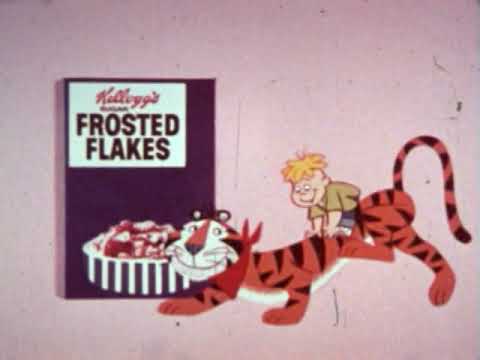
In 1952, Sugar Frosted Flakes, as it was then called, hit the shelves with Tony the Tiger front and center on the box. The launch coincided with a time when televisions were becoming common in American households. This allowed Kellogg’s to advertise their new cereal with eye-catching animated commercials featuring Tony. Right from the start, Tony’s enthusiastic personality and signature catchphrase—“They’re GR-R-REAT!”—resonated with kids and caught the attention of busy parents.
Old / Vintage Tony The Tiger Commercials

Unlike many cartoonish mascots who seemed goofy or detached, Tony came across as a positive role model. He wasn’t just a silly drawing; he felt more like a friendly coach, someone who wanted kids to do their best and enjoy life. Parents appreciated this more wholesome approach. Tony encouraged a can-do attitude, a sense of playfulness balanced by sincerity. In an era that valued family togetherness and positivity, Tony fit right in.

It didn’t take long before Tony became a household name. Sugar Frosted Flakes quickly grew in popularity, becoming one of Kellogg’s top-selling cereals. The cereal’s sweet taste and crunchy texture definitely helped, but Tony’s presence was the real star. Children identified with him, drew pictures of him, and mimicked his catchphrase around the breakfast table. Parents, in turn, associated Tony and Frosted Flakes with quality and trust.
But Tony’s meteoric rise to fame wouldn’t remain free of challenges. As we will see, changes in marketing strategies, shifting cultural values, and growing nutritional scrutiny meant that Tony would need to evolve to stay relevant.
CHAPTER 4: TONY THE TIGER AND “SUGAR” FROSTED FLAKES EVOLVES

As Tony’s popularity grew, so did his appearance and the overall marketing strategy behind Frosted Flakes. In the early years, Tony had a relatively lean appearance—simple, straightforward, and cheerful. But by the late 1960s, Kellogg’s recognized that the market was changing. Television audiences were more sophisticated, advertising was becoming more competitive, and consumers—especially older kids and teens—were becoming more discerning in their brand loyalties.
To stay ahead of the curve, Tony’s image gradually became more athletic and muscular. Kellogg’s wanted Tony to appeal not just to young children, but also to teenagers and adults who might still enjoy a bowl of Frosted Flakes or at least associate it with a healthy, active lifestyle. In commercials, Tony wasn’t just promoting breakfast anymore; he was promoting a vision of personal excellence. Whether playing baseball, basketball, soccer, or even endorsing the idea of being active in everyday life, Tony encouraged kids to get moving, participate in sports, and do their best. Frosted Flakes began marketing itself as “fuel for greatness,” implying that the cereal provided the energy kids needed to achieve their goals.
This shift was subtle but important. It aligned Frosted Flakes with a message that went beyond sugar and taste. By tying the brand to sports, fitness, and fun activities, Kellogg’s aimed to distinguish Frosted Flakes from cereals that were seen as mere sugary treats. Tony’s evolving image also mirrored broader cultural trends in the United States, where the 1960s and 1970s brought increased interest in fitness, team sports, and the idea that proper nutrition and an active lifestyle could go hand in hand.
Over the decades, Tony became more than just a box mascot. He was featured in promotional events, tie-ins with athletic programs, and even attempts at narrative storytelling.

But as times continued to change, Tony would soon face his greatest challenges yet. The 21st century would bring new scrutiny to sugary cereals, and Tony would find himself in the crosshairs of critics, regulators, and health advocates worldwide.
CHAPTER 5: CONTROVERSIES AND CRITICISM: BANNED IN COUNTRIES AND TWITTER
In the 2000s, the tone of the conversation around breakfast cereals changed dramatically. Childhood obesity rates were on the rise in many countries, and parents, educators, nutritionists, and public health officials began looking more closely at the foods marketed directly to kids. Frosted Flakes, known for its sugar content, became a prime target for criticism.
Critics pointed out what they saw as hypocrisy: Tony the Tiger was encouraging kids to get active and embrace greatness, yet the cereal he represented was high in sugar, often providing a large portion of a child’s recommended daily sugar intake in just one bowl. This disconnect raised questions about whether cereal mascots were misleading children. Was Tony, with his image of fitness and fun, essentially luring kids into unhealthy eating habits?
Kellogg’s took these criticisms seriously. The company began reformulating many of its cereals, including Frosted Flakes, to reduce sugar and add more vitamins and minerals. They revised their advertising to place greater emphasis on balanced breakfasts—often showing Frosted Flakes alongside fruit, low-fat milk, and other nutritious foods. Kellogg’s argued that Frosted Flakes could be part of a well-rounded diet, especially if combined with exercise and other healthy habits.
Still, this wasn’t enough for everyone. Several countries decided that Tony was too persuasive. Chile, Peru, Argentina, and Mexico introduced strict regulations to curb the advertising of sugary products to children. In some of these places, Tony was effectively banned from cereal boxes and TV commercials aimed at kids. The premise was simple: without Tony’s friendly, reassuring presence, children might be less inclined to pester their parents for Frosted Flakes.
Other countries, like the UK and Canada, have considered similar moves. Although Tony remains a fixture in the United States, the growing global pushback against sugary cereal marketing has created uncertainty about his long-term future. Will changing health guidelines and stricter advertising rules eventually force Tony into retirement?
Another bizarre controversy arose when Tony tried to embrace social media. In 2016, Tony the Tiger’s Twitter account was launched, intending to share motivational content and healthy living tips. It seemed like a natural fit for his persona. But instead of a wholesome community, Tony’s Twitter feed was bombarded with inappropriate and even harassing messages. The situation got so bad that Kellogg’s ended up deleting the account. This fiasco highlighted the challenges of maintaining a family-friendly brand persona in the often-toxic environment of the internet.

Yet despite all these hurdles—criticisms about sugar, bans in various countries, and unfortunate internet encounters—Tony the Tiger remains standing. Frosted Flakes is still one of Kellogg’s best-selling cereals in the U.S., and Tony continues to appear in commercials, on cereal boxes, and even in new media formats, including TikTok dances that attempt to keep the character relevant for a new generation of kids.
8 SURPRISING FACTS ABOUT TONY THE TIGER
We’ve delved deeply into Tony’s origins, evolution, and controversies, but there’s always more to learn. Let’s wrap up with 10 surprising facts about Tony the Tiger that many fans don’t know:
- Thurl Ravenscroft’s Other Claim to Fame: Tony’s voice actor, Thurl Ravenscroft, is also the one who sang “You’re a Mean One, Mr. Grinch” in the classic Christmas special “How the Grinch Stole Christmas!” Talk about versatility.
- Tony’s Family: In the 1970s, Kellogg’s introduced Tony’s wife, Mrs. Tony, their son Tony Jr., their daughter Antoinette, and Mama Tony. Although they appeared primarily in advertising materials during that decade, they added depth to Tony’s character.

- A Global Sensation: Tony is recognized in over 50 countries. In Mexico, he’s known as “Tigre Toño,” in France as “Tony le Tigre,” and in Germany as “Tony der Tiger.” His universal appeal shows the power of a well-crafted brand character.
- Macy’s Thanksgiving Day Parade: Tony was once honored with a giant balloon in the famous Macy’s Thanksgiving Day Parade in New York City. Being part of this event puts him in the company of some of the most iconic characters in popular culture.
- Italian Roots: According to Kellogg’s, Tony is technically Italian-American. In Italy, he’s “Tony il Tigre,” beloved much like he is in the U.S. This nod to international flair helps him resonate with diverse audiences.
- From Sugar Frosted Flakes to Frosted Flakes: Initially called “Sugar Frosted Flakes,” the “Sugar” was dropped from the name in the 1980s as consumer attitudes toward sugar shifted. This subtle change reflected broader industry trends.
- Early Competition: Tony’s victory over Elmo the Elephant, Katy the Kangaroo, and Newt the Gnu was no accident. Careful research and testing showed that Tony had the best combination of qualities to resonate with consumers.
- Adaptability Over Time: Tony’s image has been tweaked continuously. From lean and simple to muscular and athletic, he has changed to fit the times, reflecting cultural shifts in fitness, health awareness, and marketing techniques.
- Sports Sponsorships and Tie-Ins: Throughout the years, Tony has been associated with sporting events, youth sports teams, and active lifestyle campaigns. This helped cement his image as more than a spokesperson—he became a symbol of vigor and optimism.

8. Survival Amid Controversy: Despite bans in various countries and relentless criticism about pushing sugary foods to kids, Tony has shown a remarkable staying power. The cereal aisle remains his domain, and he continues to influence how we think about breakfast branding.
CONCLUSION
And there you have it—Tony the Tiger’s incredible story, from an unknown young cub in a brainstorming session at Kellogg’s to an international advertising star who has inspired confidence, faced controversies, and adapted to the changing landscape of consumer expectations. He started as a tool to sell cereal, but over the decades, Tony became much more: a cultural icon, a voice in the living room, and a figure who has weathered intense scrutiny and changing global attitudes about food and health.
Now, the question is yours to answer: Should we view Tony the Tiger as a beloved breakfast legend who brings smiles and positivity to millions of children, or should we be more critical, acknowledging that he represents a product that critics say “poisons kids with sugar”? Perhaps the truth lies somewhere in between. Tony’s story is ultimately about the evolution of advertising, the complexities of marketing to children, and the way a cartoon tiger captured the hearts of multiple generations while also attracting the ire of health advocates.
We want to hear your thoughts. Should Tony be canceled like in some other countries, or does he still have a place at your breakfast table? Drop your opinions in the comments. And if there’s another cereal character or advertising mascot you’d like us to explore, let us know. Don’t forget to support this channel by subscribing and liking this video (or blog post). Thanks for watching—and remember, when it comes to marketing icons, the story behind the stripes is often more complicated than it appears.